
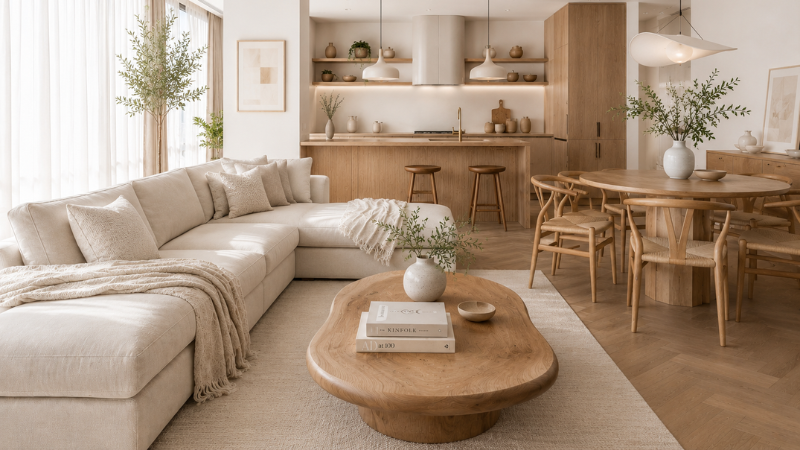
If your living room feels a little too cold or cluttered, Japandi style might be the perfect balance. By combining the calm simplicity of Japanese interiors with the warmth and comfort of Scandinavian design, Japandi creates a space that feels clean, cozy, and easy to live in every day.
In this guide, you’ll find 10 Japandi living room ideas that can instantly make your space feel warmer, softer, and more intentional — whether you’re redesigning the entire room or simply updating a few small details.
What Is The Japandi Style?
Before getting into the ideas, it helps to understand what Japandi style is all about.
Japandi combines the simplicity of Japanese interiors with the warmth and comfort of Scandinavian design. The result is a space that feels calm, clean, and cozy without looking overly decorated.
Compared to traditional Japanese interiors, which often use darker wood tones and very low furniture, Japandi feels softer and more relaxed. Scandinavian influences bring in lighter colors, warmer textures, and a more comfortable everyday living feel. If you want to learn more about how the style works in real spaces, this Japandi living room guide explains it in more detail.
Some of the most recognizable elements of Japandi design include:
- Neutral colors like warm white, beige, soft gray, and charcoal
- Natural wood materials such as walnut, oak, and ash
- Simple furniture with clean lines and minimal detailing
- Less clutter and more focus on thoughtful, functional pieces
- A connection to nature through natural light, indoor plants, and organic textures
10 Japandi Living Room Ideas To Try Now
1. Choose A Walnut Wood Coffee Table As Your Anchor Piece

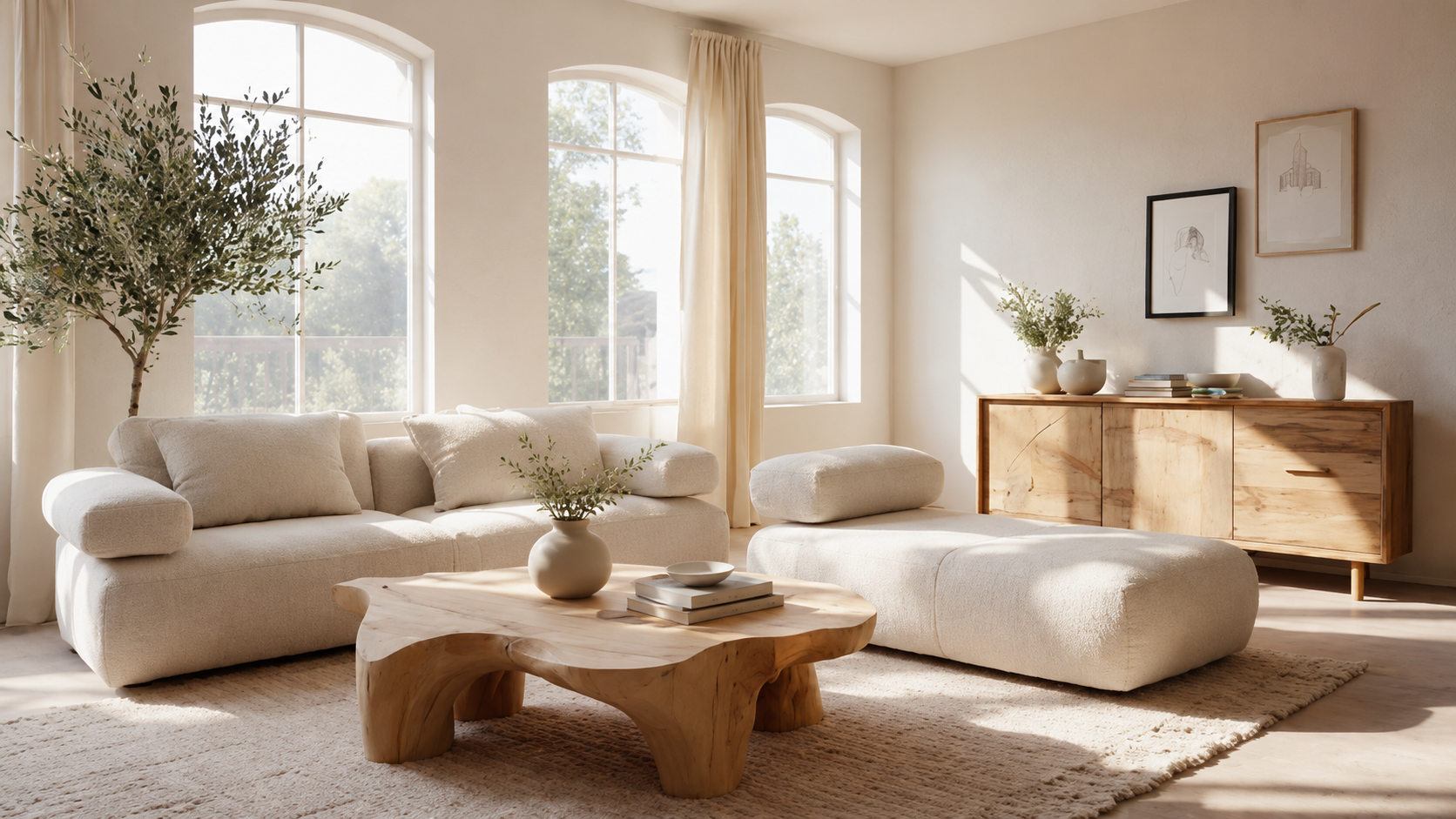
A solid walnut coffee table is often the piece that ties a Japandi living room together. The warm wood tones and natural grain bring a calm, cozy feeling to the space while adding a timeless look that never feels overdone.
In Japandi design, simplicity matters most. Clean rectangular or oval shapes work beautifully, with minimal details and a focus on natural materials. Walnut already has so much character on its own, so the wood grain becomes the main highlight without needing extra decoration.
If you’re unsure what size coffee table fits your space best, our Coffee Table Size Guide can help. You can also learn more about why walnut is such a popular choice in modern interiors in What Is Walnut Wood?
2. Keep Your Color Palette Warm And Neutral
Japandi spaces usually avoid bright white walls or overly bold colors. Instead, the palette leans toward warm, natural tones that make the room feel calm and comfortable.
Warm white or off-white works beautifully for walls, while beige, sand, and taupe add softness through textiles and furniture. Darker accents like charcoal or deep navy can help create balance and add depth to the space.
In most Japandi interiors, one accent color is usually enough. The focus is on keeping the room visually calm, simple, and easy to relax in.
3. Choose Low-Profile Furniture With Clean Lines

Large sofas and bulky armchairs can make a Japandi living room feel heavy and crowded. Instead, Japandi spaces tend to use lower-profile furniture with simple shapes and a lighter visual feel.
A few details that work especially well in Japandi interiors:
- Sofas that sit lower to the ground for a more relaxed look
- Wooden legs with a natural finish instead of metal or chrome
- Clean, simple silhouettes with minimal detailing
- Soft, neutral fabrics that keep the space feeling calm and warm
The low and elongated look comes from traditional Japanese interiors and helps create a more open, spacious feeling — even in smaller living rooms.
4. Layer Textures Thoughtfully: Linen, Wool, And Wood
Because Japandi interiors use a soft and minimal color palette, texture becomes what gives the space warmth and depth. Mixing natural materials helps the room feel more relaxed, layered, and inviting without needing a lot of decoration.
Some textures that work beautifully in Japandi spaces include:
- Linen cushion covers and soft woven throws
- Wool or jute rugs in warm, muted tones
- Natural solid wood surfaces on coffee tables or side tables
- Organic fabrics and materials that feel simple and understated
Whenever possible, avoid overly synthetic materials. Japandi design is meant to feel comfortable and natural — not only visually, but also in the way the space feels to live in every day.
5. Create A Minimalist Japandi TV Wall

The TV area can easily make a living room feel busy or cluttered, which is why Japandi interiors keep this space as clean and simple as possible. A wall-mounted TV paired with a floating walnut TV console creates a more calm and balanced look without overwhelming the room.
Instead of filling the wall with extra decor, Japandi design keeps the area minimal and uncluttered. Closed storage cabinets also help hide media devices, cables, and everyday items so the space still feels clean and relaxing.
If you want more inspiration for creating a clean and modern entertainment space, take a look at our Japandi TV Wall Design Ideas
6. Bring In Biophilic Elements: Plants And Natural Light
Nature plays a big role in Japandi interiors. Both Japanese and Scandinavian design focus on creating spaces that feel calm, natural, and connected to the outdoors, which is why organic materials and natural light are so important in this style.
A few simple ways to bring that feeling into your living room include:
• Adding one or two larger indoor plants like a fiddle leaf fig, snake plant, or olive tree
• Using sheer curtains that soften natural light instead of blocking it completely
• Choosing natural materials such as wood, stone, linen, and clay throughout the space
In Japandi design, the goal is to make the room feel warm, grounded, and connected to nature without adding unnecessary decoration.
7. Declutter Ruthlessly — Less Is Always More
Japandi style works best in spaces that feel open, calm, and uncluttered. Instead of filling the room with too many decorative pieces, the focus is on keeping only the things that are useful or truly meaningful to you.
One of the key ideas behind Japandi design is the Japanese concept of “ma” or negative space. In simple terms, it means not every corner needs to be filled. Leaving some areas intentionally empty helps the room feel lighter, more balanced, and more relaxing to spend time in.
8. Embrace Wabi-Sabi: Celebrate Imperfection In Handcrafted Pieces
Wabi-sabi is a Japanese philosophy that finds beauty in things that feel natural, imperfect, and lived-in. Instead of chasing perfection, it values character, craftsmanship, and materials that become more beautiful over time. If you want your home to feel warm and intentional rather than overly styled, this overview of wabi-sabi in interior design is a great place to start.
In a Japandi living room, wabi-sabi often appears through simple, handcrafted details like:
- Ceramic vases with organic shapes and uneven textures
- Handmade solid wood furniture that keeps the natural grain and character of the wood visible
- Natural materials that age beautifully over time instead of looking overly polished or artificial
Choosing a handmade walnut coffee table instead of a mass-produced piece is part of that philosophy. The natural wood grain, subtle imperfections, and aging process are what give the furniture its unique character over time
9. Pick A Statement Rug In Muted Earth Tones
A rug helps bring the entire living room together and makes the seating area feel more grounded and cohesive. In Japandi interiors, rugs are usually simple, understated, and made from natural materials that add warmth without overwhelming the space.
When choosing a Japandi-style rug, look for:
- Soft, muted colors like warm beige, dusty sage, taupe, or charcoal
- Natural materials such as wool, jute, or cotton
- A size large enough for the front legs of the sofa to sit on, helping the space feel more connected
- Flatweave or low-pile textures that keep the room looking clean and minimal
Instead of bold patterns or thick shaggy rugs, Japandi design leans toward subtle textures that feel calm, warm, and timeless.
10. Soften The Room With Warm, Layered Lighting
Lighting plays a big role in creating the calm and cozy feeling that Japandi interiors are known for. Instead of relying only on bright overhead lighting, Japandi spaces use softer layers of light to make the room feel warmer and more relaxed.
A few lighting ideas that work especially well in Japandi living rooms include:
- A paper pendant lamp above the coffee table inspired by traditional Japanese lanterns
- A floor lamp in the corner for soft ambient lighting
- Small table lamps or candles to create a warm evening atmosphere
Warm white bulbs usually work best for this style, helping the space feel softer and more inviting. Cooler white lighting can make the room feel too sharp and take away from the cozy atmosphere Japandi design is known for.
How To Shop For Japandi Furniture
When choosing furniture for a Japandi living room, the focus should always be on quality, simplicity, and materials that feel natural over time.
A few simple principles can help when sourcing pieces for the space:
- Choose solid wood whenever possible. Natural wood has real texture, depth, and character that makes a Japandi room feel warm and authentic. It also ages beautifully and can last for many years with proper care.
- Look for handcrafted pieces when you can. Handmade furniture often feels more personal and unique because small details, wood grain, and natural variations are left visible instead of being perfectly uniform.
- Buy fewer pieces, but choose them carefully. Japandi interiors work best when the room feels open and intentional rather than overcrowded with furniture and decor.
If you’re not sure where to start, our Coffee Table Buying Guide covers everything from materials to sizing and can help make the process a lot easier when furnishing your space.
Ready To Create Your Japandi Living Room?
Japandi is more than just a design trend - it’s a way of creating spaces that feel calm, intentional, and comfortable to live in over time. Instead of trying to finish everything at once, start with one key piece you truly love, like a solid walnut coffee table or a simple, clean-lined sofa, then slowly build the room around it.
Layer in warm neutral tones, natural textures, and furniture that feels meaningful rather than purely decorative. The most beautiful Japandi living rooms usually come together gradually, with pieces that age well and feel personal to the space.
If you want to learn more about the philosophy behind the style, our full Japandi Interior Design Explained guide goes deeper into the details.
And if you're starting with the entertainment area, you can also browse our Walnut TV Stand collection for inspiration.
FAQ
What is Japandi style in simple terms? Japandi blends Japanese minimalism with Scandinavian warmth — clean lines, natural wood, muted neutrals, and a strong preference for materials and objects that are honest and functional.
What colors work in a Japandi living room? Warm white, off-white, beige, sand, taupe, and charcoal. Stay within warm undertones and avoid anything stark or saturated.
What kind of furniture is best for Japandi? Low-profile pieces with clean lines, solid wood (especially walnut or oak), and simple silhouettes without ornate detailing. Every piece should feel like it belongs in the room rather than being placed into it.
Is Japandi the same as minimalism? Not quite. Minimalism tends toward cold and strict. Japandi keeps the restraint but adds warmth through natural materials, soft textures, and layered lighting — it's minimal, but livable.


Leave a comment
This site is protected by hCaptcha and the hCaptcha Privacy Policy and Terms of Service apply.